
The Cure They Keep Prescribing
Updated: Aug 1
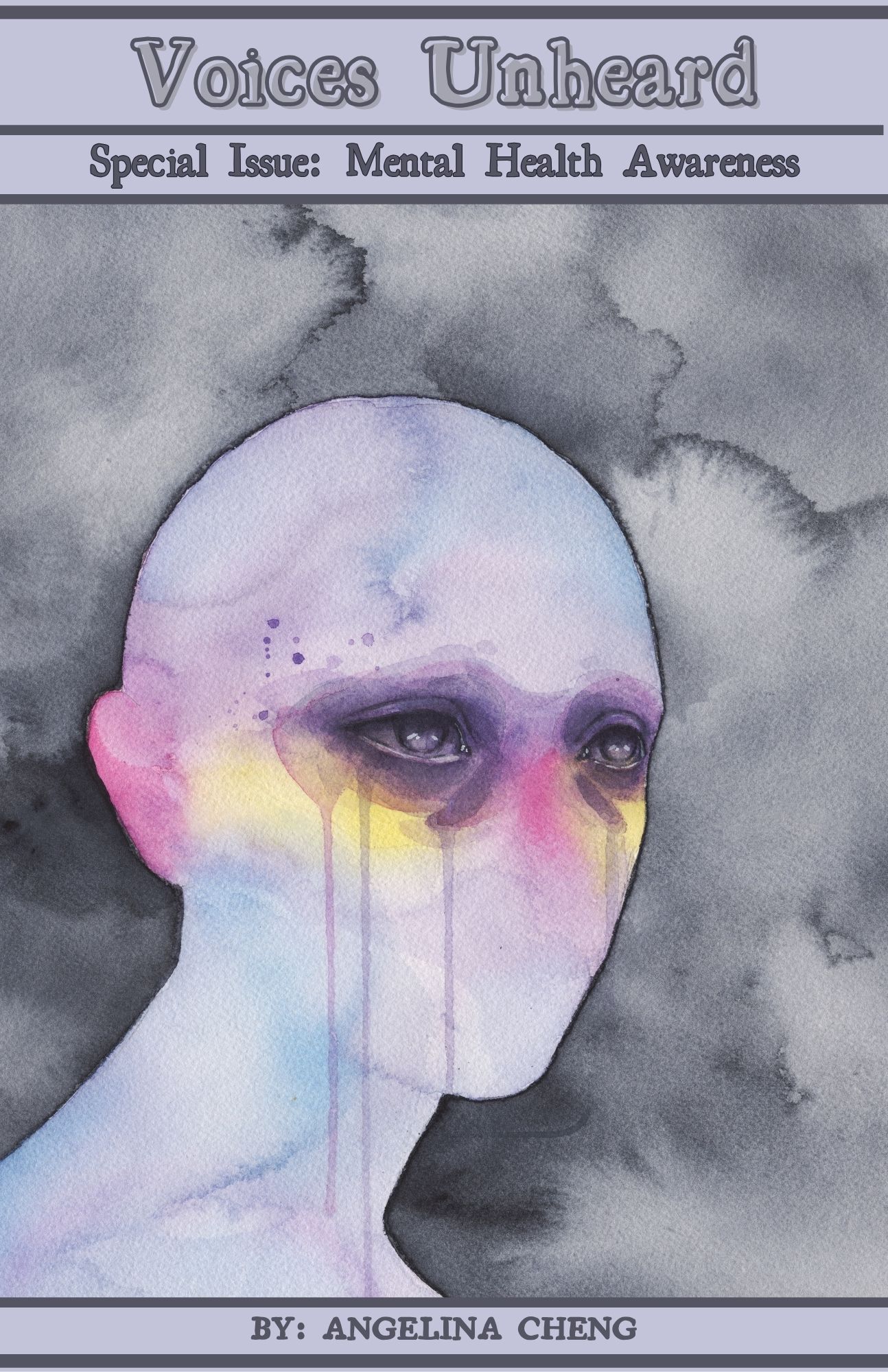
When people talk about healing from mental illness, they talk about returning to society. They talk about reintegration, reconnection, and reengagement. Doctors say the goal is to get you back out there—back among people, back into the community. The language is always hopeful. Healing means learning to trust again. Healing means rediscovering connection. Healing means finding your way back to the world. Mental health campaigns repeat the message with cheerful certainty: humans need community.
And maybe that is true.
But there is a question that sits quietly beneath all of that optimism, a question that people rarely ask out loud. What if the world is where the damage began? What if the community they keep urging you to return to is the same community that taught you, very early in life, that safety is not guaranteed?
I was seven years old when my understanding of the world changed permanently. Children begin life believing the world is structured around protection. Adults are supposed to keep them safe. Families, neighborhoods, communities—these things are supposed to form a kind of invisible shield around childhood.
But sometimes the shield fails.
When that happens, the damage is not only physical or emotional. It is structural. The architecture of trust collapses. The child’s brain must suddenly rewire itself around a terrifying realization: the world that promised safety can also be the place where harm begins.
Children cannot process something like that the way adults do. They do not have philosophical frameworks or political language or psychological terminology. They only have instinct.
And instinct says: survive.
The body survives first. The mind comes later.
Years pass. Memories shift and hide in strange corners of the brain. What happened does not disappear, but it changes shape. It becomes something the nervous system carries quietly, like a shadow attached to every experience.
Eventually, the medical language arrives.
PTSD.
OCD.
ADHD.
Major depressive disorder.
Bipolar II.
Severe anxiety.
Excoriation disorder—the clinical name for the compulsive picking that appears on my skin like small constellations of anxiety.
Each diagnosis attempts to explain the same thing: a mind that learned too early that the world can be dangerous. Mental illness is often described as a chemical imbalance. Sometimes that description is accurate.
But sometimes it is also incomplete.
Sometimes what we call illness is a brain that has adapted to survive something it should never have had to survive.
There is another part of my life that people struggle to understand. I have lived a good portion of my life inside my own mind. Psychologists might call it maladaptive daydreaming. They describe it as excessive fantasy, an avoidance behavior, a symptom of distress.
But for me, it was also survival.
When the outside world became unbearable, I built another one. Inside my head were places where the rules were different. Places where the danger that existed in the real world could not reach me.
The worlds inside my mind were not small.
They were entire landscapes.
Stories unfolded there. Characters existed there. Entire emotional histories developed there over years and sometimes decades.
Sometimes those worlds began in movie theaters. I remember sitting in the darkness of a cinema, surrounded by strangers and the flicker of a giant screen. For two hours, reality loosened its grip on me. The outside world became distant. Stories filled the air like oxygen.
Inside those stories, I could exist safely.
In a movie theater, the bullies couldn’t reach me. The people who hurt me had no access to that space. The darkness of the theater became a kind of sanctuary.
Music could do the same thing.
A single song could open a doorway in my mind. Scenes would appear, entire narratives forming behind my eyes as though my imagination were a stage and the music had raised the curtain.
Books did it too.
Libraries became some of the safest places I knew. From childhood onward, I ran to them the way someone runs toward water in a desert. The quiet aisles, the smell of paper and dust, the soft turning of pages—those buildings held entire universes.
I didn’t just read them.
I lived inside them.
Stories gave me something the outside world often failed to provide: a sense that meaning and justice and beauty could still exist somewhere.
The more stories I encountered, the more my own imagination began producing them. Characters developed. Plots evolved. Inner worlds expanded.
For years—decades, even—I carried entire narratives inside my mind, waiting for the day my writing skills would catch up with the stories that already lived there.
The talent existed before the technique. The world existed before the language.
Imagination was not trapping me.
It was protecting something.
Eventually, the outside world begins asking questions.
Why are you so quiet? Why do you spend so much time alone? Why are you always in your head?
The assumption beneath those questions is simple.
You are supposed to return.
Return to the real world. Return to society. Return to the same structures that shaped the wounds in the first place.
But I often find myself asking something different.
Why?
Why should I abandon the worlds that kept me alive?
If someone is living safely inside their own mind—if they are not harming themselves and not harming anyone else—why must that be treated as dysfunction?
Why is imagination considered pathology when it becomes too vivid, too immersive, too necessary?
The people asking these questions believe they understand what is best.
But often they do not know the person they are speaking about. They do not know the private landscapes that exist inside that person’s mind. They do not know the things that person survived.
They do not know the difference between isolation and refuge.
Mental health culture loves the story of recovery. It is a comforting narrative. Trauma becomes growth. Pain becomes resilience. The survivor eventually returns to society stronger than before.
But the story leaves something out.
Society itself is not innocent. Community is not automatically benevolent. The same systems that claim to protect people can also fail them.
Families fail.
Institutions fail.
Communities fail.
Children do not exist outside society.
They exist inside it.
So when a child is harmed, the failure is not only personal. It is collective.
Yet the same collective that failed them later becomes the destination of their supposed healing.
Go back out there, they say. Trust the system again. Return to the community.
But what if community was the place where the damage began?
My relationship with society is complicated. I do not trust it easily. Not because I am naturally cynical, but because experience taught me that harm does not always come from strangers in dark alleys.
Sometimes it comes from familiar places.
Sometimes it comes from the same structures that claim moral authority.
So when people say healing means learning to trust again, I hear something else.
I hear a request.
A request for survivors to make the world comfortable. To reassure everyone that the system ultimately works. To participate in a narrative that ends with reconciliation.
But reality is not always so tidy.
The world can be beautiful.
And the world can be cruel.
Often at the same time.
There is another assumption hidden inside the recovery narrative. It assumes the goal is to become the person you would have been if the trauma had never happened.
But that person no longer exists.
They disappeared the moment the first boundary was crossed.
You cannot return to a timeline that was erased.
What you can do is build something new in the aftermath.
Something different.
Something honest.
The expectation that survivors must rejoin society as proof of healing carries an odd implication. It assumes that withdrawal is failure. That caution is dysfunction. That mistrust is pathology.
But sometimes mistrust is memory doing its job. Sometimes caution is wisdom. Sometimes distance is survival.
Healing does not always mean running back toward the place where you were burned.
Sometimes it means learning how to exist near the fire without stepping into it again.
My imagination gave me something the outside world often could not: safety, space, room to breathe.
Those inner worlds did more than shelter me. They also planted seeds.
For years I carried stories in my mind—stories shaped by the music I listened to, the films that inspired me, the books that filled the shelves of the libraries where I hid.
Those stories waited patiently.
They waited until my writing skills finally grew strong enough to bring them into the world.
In that way, the same imagination that helped me escape also helped me create.
What people might call maladaptive became, in its own strange way, a creative engine.
It preserved something.
Something that refused to die.
So when people insist that healing means abandoning those inner worlds, I believe they misunderstand something fundamental.
Healing does not always mean leaving behind what saved you.
Sometimes it means honoring it.
Sometimes it means recognizing that the imagination which sheltered you as a child is also the source of your creativity, your voice, your ability to tell the truth about difficult things.
Sometimes the mind builds worlds because the outside one has not yet earned your trust.
And maybe that is not dysfunction.
Maybe that is wisdom.
The goal of mental health should not be forcing survivors back into the same social narrative that allowed their suffering to go unseen.
The goal should be agency.
Choice.
The right to decide how much of society you want and how much distance you need.
The right to build a connection slowly, carefully, and on your own terms.
Healing is not a return.
It is reconstruction.
A life assembled piece by piece from the ruins of what once existed.
Maybe that life includes community.
Maybe it does not.
Maybe it includes a few carefully chosen people instead of a crowd.
Maybe it includes long hours inside imagination, inside stories, inside the quiet safety of a library.
Maybe healing means living partly in worlds you built yourself because those worlds once protected you when nothing else did.
What matters is that the choice belongs to the survivor.
Not to society.
Mental health conversations often focus on fixing the individual.
But sometimes the more uncomfortable question is this:
What if the individual responded exactly as a wounded human mind would respond?
What if the real work is not forcing survivors to adapt to society, but forcing society to become worthy of their trust?
